
Skip to content
Industrial airflow. Personal project support.Plan your space Sample collection · Not available for purchase
NORTHWINDINDUSTRIAL AIRFLOW
Concept of a sunlit workshop with a large silver ceiling fan, green workbenches and open floor space
About NORTHWIND

Industrial airflow.
A closer look.

Meet NORTHWIND
Concept imagery
About NORTHWIND

A focus on
industrial airflow.

NORTHWIND focuses on industrial ceiling fans for warehouses, workshops and commercial spaces. We bring product information and practical selection guidance together, helping you connect the right fan with the way your space is used.

Explore our fans


Concept of two people reviewing a fan controller and an aluminium blade sample at a workbench
Company / Concept imagery
Concept assembly floor with silver fan blades, green workbenches and technicians preparing drive components
Production / Concept imagery
Factory & manufacturing

From individual parts
to complete fans.

A complete industrial fan connects blades, a drive assembly, controls and mounting hardware. Production brings these parts into one clear configuration.

Material preparation

Profiles, components and finishes matched to the model and intended environment.

Assembly and consistency

Fit, alignment, secure connections and clear product identification.

Packing and delivery preparation

Protection for long blades, organised hardware and the right installation documents.

Read the manufacturing process

Material preparation

Material choice, component dimensions and surface treatment should suit the intended application. Indoor use, moisture, dust and other site conditions can create different requirements. The relevant materials and finish options belong in the documentation for each model, alongside any limits on where it can be installed.

Assembly and consistency

Fit, alignment and secure connections matter throughout assembly. Useful factory information shows the actual production stages and explains which operations happen on site, which involve specialist suppliers and how an individual product is identified. Clear records make the manufacturing process easier to understand and trace.

Packing and delivery preparation

Long components, electrical controls and installation hardware need suitable protection and clear identification. A complete order should be understandable at arrival, with model references, packing information and the applicable installation documents.

Research & development

Designed around
real installation needs.
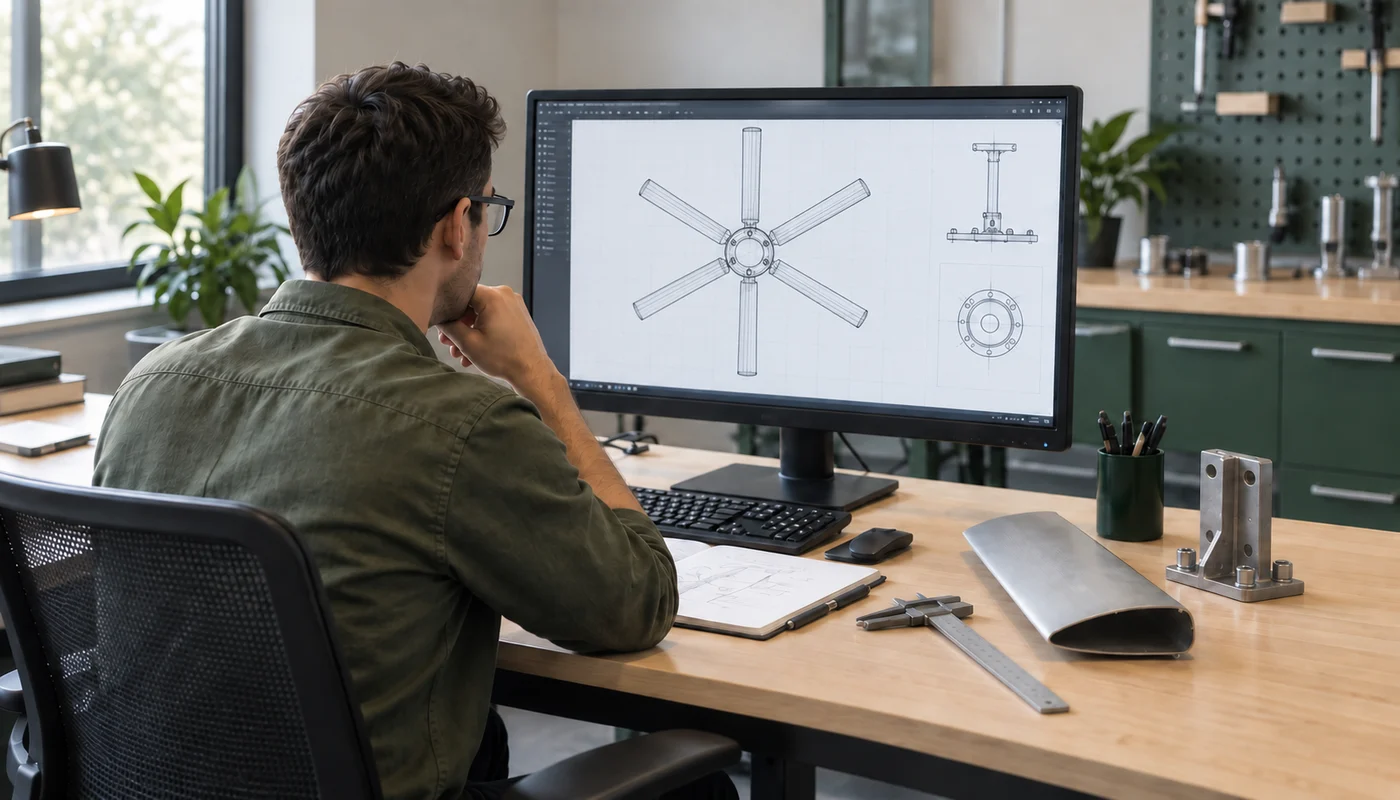
Concept design review with a ceiling-fan drawing on a monitor, blade cross-section and mounting samples
Design review / Concept imagery

Developing a large-diameter fan means considering airflow, the drive system and installation as one connected design.

Airflow & blade geometry

Diameter, blade shape, speed and mounting height all influence air movement.

Motors & controls

Electrical requirements and the way a person operates the fan need to work together.

Installation & service

Mounting conditions, access and clear instructions belong in the design discussion.

Read the development process

Airflow & blade geometry

Blade geometry, diameter, speed and installation height influence how air moves through a space. Layout matters too: beams, racks, equipment and other obstacles can change the result. Model comparisons are most useful when their measurements and operating conditions are explained consistently.

Motors & controls

The drive and control system should be considered together. Electrical requirements, speed adjustment, protection functions and the way a person operates the fan all affect practical suitability. Any integration options should be described for the specific configuration being supplied.

Installation & service

A design also needs to be installed, inspected and maintained. Mounting conditions, access to components and clear instructions are part of that discussion. A documented development example connects a specific requirement with a design decision and the evidence supporting the result.

Testing & quality control

Test the details.
Document the result.

Quality information is useful when the product, the method and the scope of the assessment are clear.

Component checks

Dimensions, identification and assembly condition provide a starting point for a documented inspection.

Operating performance

Airflow, power and sound figures need the test setup and operating conditions alongside the result.

Technical documentation

Model references, installation requirements and applicable reports help make product limits understandable.

See testing details
Component checks

Depending on the documented production process, checks may address component identification, dimensions, connection security and assembly condition. Their scope matters too: a unit-level inspection and a sample assessment provide different kinds of information about a product.

Operating performance

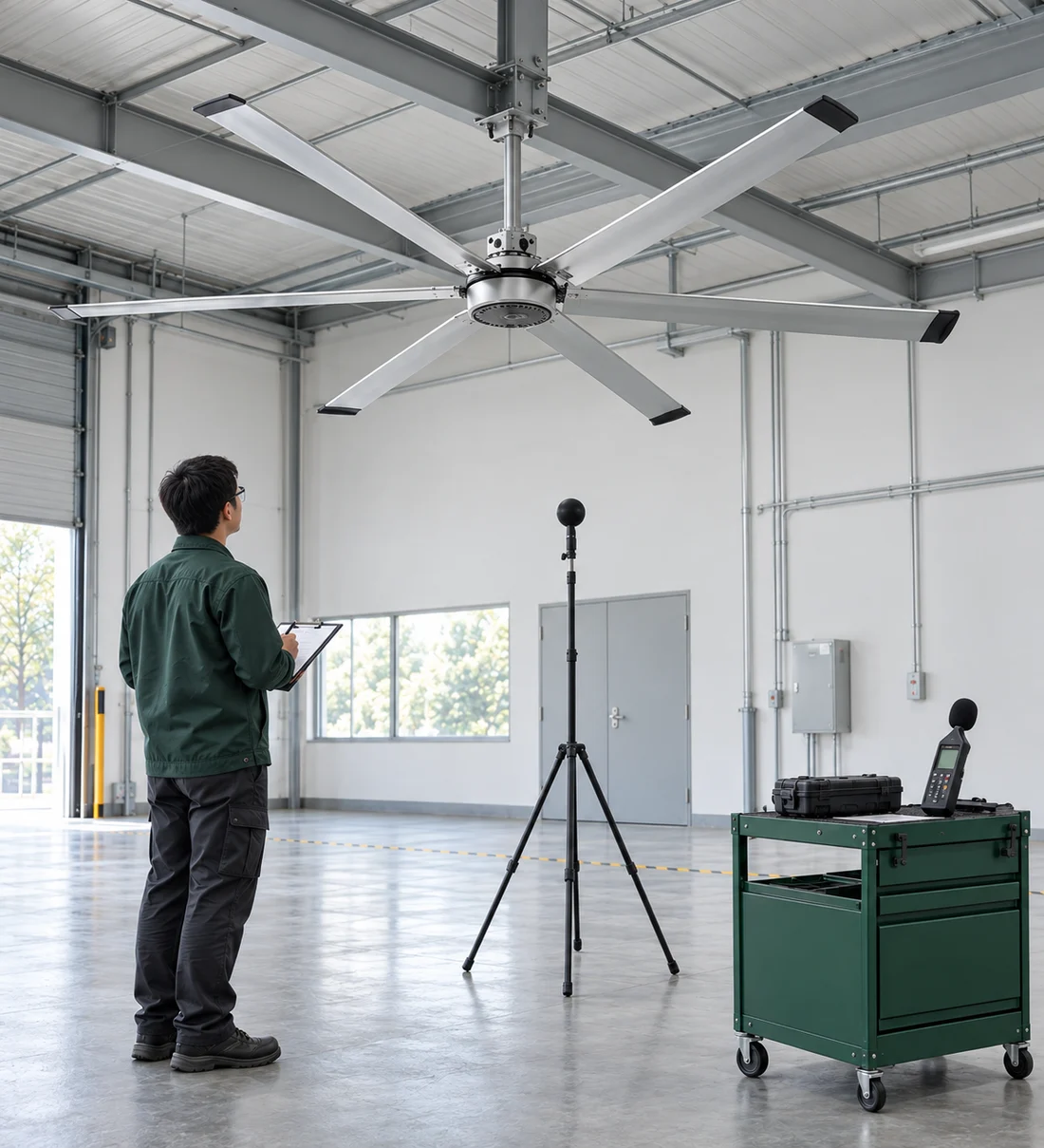
Airflow, power input, rotational speed and sound measurements need context. Test setup, operating settings, measurement position and environmental conditions can affect the figures. Published values should identify the relevant conditions so readers can make informed comparisons without treating a laboratory result as a guarantee for every building.

Technical documentation

Electrical and mechanical requirements vary by product and destination. If certifications or third-party reports are available, check the applicable model, standard and issuing body. Installation clearances, mounting requirements and maintenance guidance should remain easy to find alongside those documents.

Concept evaluation bay showing an overhead industrial fan, a technician and measuring instruments
Evaluation setup / Concept imagery
Questions, answered

Before the
next step.

A few useful starting points for product selection and project enquiries.
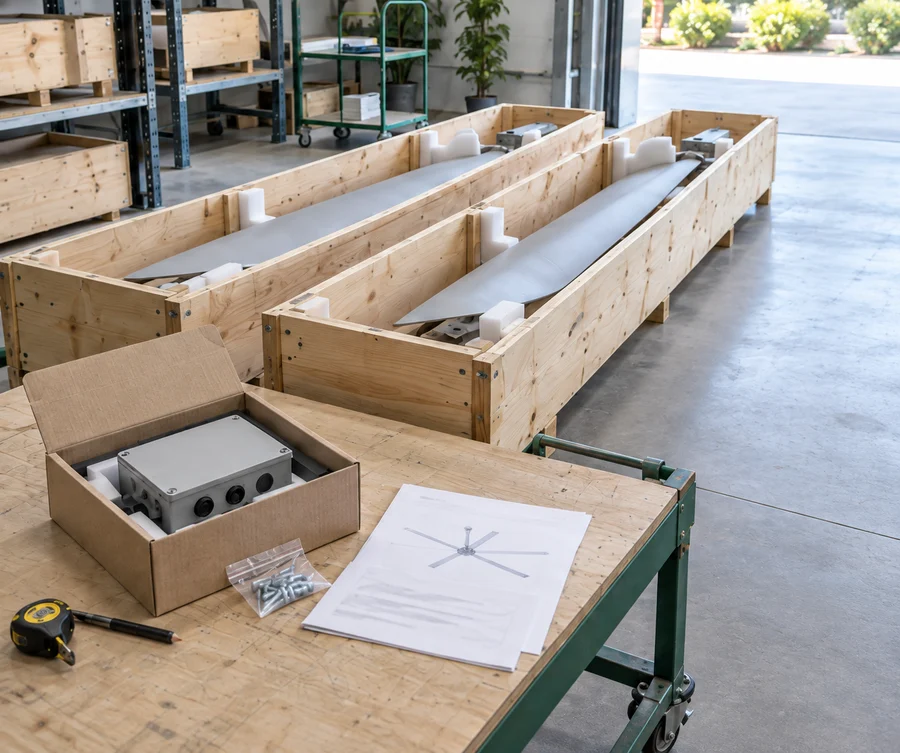
Concept packing area with fan blades protected in wooden crates, a boxed controller and installation papers
Packing / Concept imagery
What information helps with fan selection?

Start with the building use, floor area, ceiling height and main obstacles. Add the country, electrical supply and approximate quantity where known. A layout or clear photograph can make the space easier to discuss.

Start a project enquiry
How should I compare industrial fan models?

Compare the intended environment, diameter, mounting requirements, controls and electrical details. Check that performance figures use comparable methods and settings. Coverage estimates also depend on the layout and installation conditions.

Can I discuss a project with several fans?

Share the overall layout, activity zones, ceiling heights and major obstacles. Fan quantity and positioning should be considered together, alongside mounting conditions, power and how the fans will be controlled.

What should I check in product documentation?

Review the relevant model’s specifications, installation instructions, electrical requirements and maintenance guidance. For any test report or certificate, check the model reference, issuing organisation and applicable scope.

What if my site has special requirements?

Include the site conditions and any required controls, finishes or documents in your enquiry. Suitability and availability need to be confirmed for the relevant model and order.

Your space, next

A good choice starts
with a conversation.

Choosing one fan or planning for a larger space? Bring your dimensions,
a layout or a question. Start with what you know.

Tell us about your space Browse industrial fans
Concept of hands reviewing a floor plan on a workshop table with a green notebook and drawing tools
Concept imagery